The UK government’s Clean Power 2030 plan is driving a rapid expansion of renewable generation, with battery energy storage systems (BESS) and solar colocation becoming key tools in enabling resilient grid connections. Delivering these sites means managing a complex mix of civil, structural, and electrical requirements – from foundations, access/internal roads, earthworks and drainage to control/switchgear buildings, substation interfaces, and cable containment.
For private network developers, the challenge is clear: early civil design decisions directly affect constructability, programme certainty, and cost efficiency. Civil and structural teams that can navigate multi-disciplinary integration, optimise site layouts, and anticipate technical risks provide a critical foundation for successful solar-BESS deployment.
“Each site brings its own constraints, but the principles are consistent – you’re working to integrate drainage, levels, geotechnical and environmental constraints, structural design and electrical infrastructure. With these projects, many of the key decisions sit in the civil design early on. If those are resolved clearly at the outset, it provides a stable, predictable platform for all other disciplines,” says Shane Govender, Principal Civil Engineer at Whitfield Consulting Services (WCS).
Solar and BESS civil design as a lever for efficiency and risk management
Effective civil design supports developers in three core areas:
- Constructability and cost optimisation: Techniques such as precast foundations, prefabrication, and soil stabilisation reduce material use, programme duration, and carbon footprint, while improving safety and buildability.
- Risk assessment and compliance: Civil design teams identify ground condition constraints, flood risks, access challenges, environmental and ecological sensitivities, embedding solutions into the design to meet regulatory and programme demands.
- Integration and coordination: Civil layouts must anticipate electrical and mechanical requirements, including cable corridors, HV equipment positioning, and temporary works. Early alignment prevents clashes, reduces rework, and accelerates construction.
Communication and collaboration are key to underpin and support a right-first-time approach to project delivery. Regular interdisciplinary meetings, clear interface definitions, and open dialogue with contractors, clients, and OEMs ensure that civil, electrical, and structural teams operate in sync. “Collaboration leads to less rework and a smoother design process. Everyone is on the same page, and that speeds up construction,” Shane notes.
Choosing the right site for Solar and BESS projects
Selecting the right site is as important as the design itself. Ground conditions, flood risk, planning constraints, ecological factors, and site access all impact cost, constructability, and long-term operational reliability. WCS supports developers through feasibility studies, early risk assessments, and advisory services to identify the most suitable sites.
Early evaluation of flood zones, environmental designations, access limitations, and other potential constraints ensures that developers avoid unexpected cost escalations or programme delays. Importantly, WCS can also mitigate issues highlighted during these assessments. For example, if noise, visual impact, or local environmental sensitivities are identified, the civil design can be adapted through screening, enclosure, or layout optimisation to maintain compliance and reduce disruption.
“Our role is to provide guidance on site feasibility, understanding the ground conditions, flood risk, and how the design can integrate civil and electrical requirements. This early input is key to maximising budget, ensuring site longevity and programme certainty,” Shane says.
Civil design driving cost savings and reducing risk
WCS’s civil design approach delivers tangible cost efficiencies by combining careful planning, early risk mitigation, and creative engineering solutions.
At Monk Fryston, a 320MW BESS, the team faced a tight schedule and a constrained site footprint. “To meet the tight construction deadlines, we adopted a fast-track design approach, prioritising critical-path elements and early contractor input,” Shane explains. By using modular buildings, soil stabilisation, and screw pile foundations, Shane and his team reduced material volumes and on-site construction time, delivering savings while maintaining structural performance and sustainability targets. Advanced 3D terrain modelling optimised cut-and-fill earthworks, improved drainage and insight to clash detection, further lowering construction effort and associated costs.
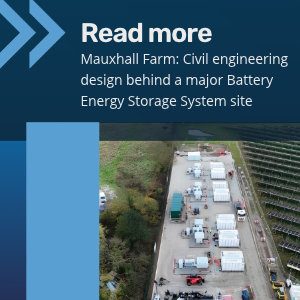
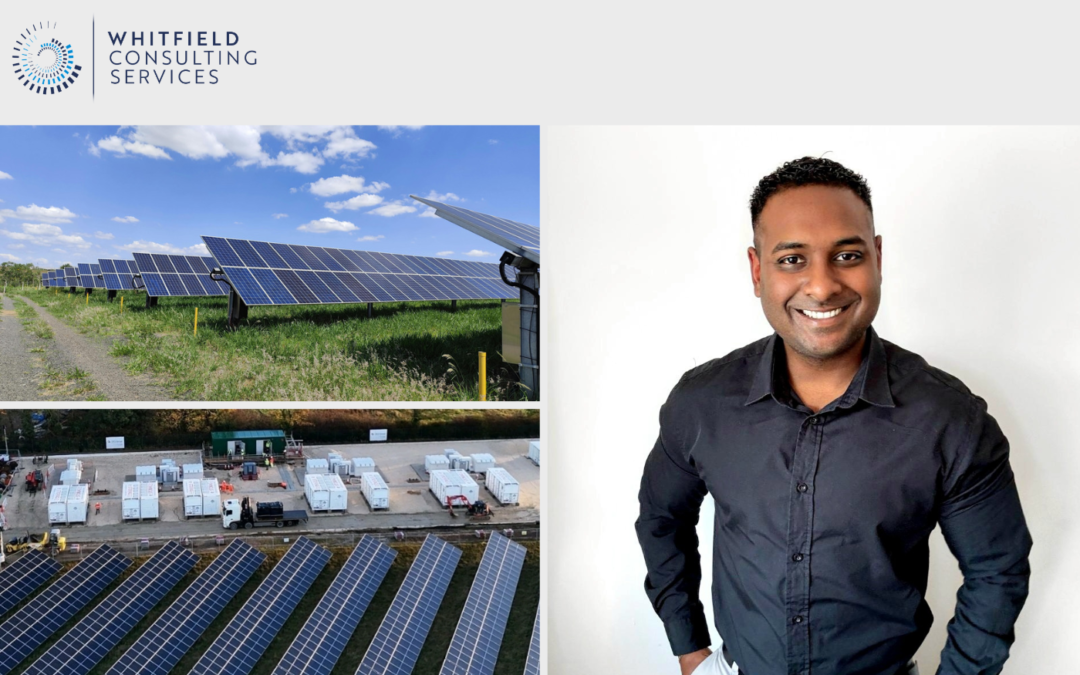
Similarly, at Mauxhall Farm, a major co-located renewable energy and storage facility, flood risk and dual-purpose stormwater and firewater containment could have added significant cost if addressed reactively. The WCS team elevated foundations above predicted flood levels and incorporated sealed penetrations to enhance resilience. “Flood-resistant and resilient construction reduces the likelihood of damage, contamination or hazardous failures,” Shane notes.
What to look for in a civil design partner
Private network developers should prioritise partners who:
- Bring sector experience: Knowledge of BESS, solar, and substation design ensures informed decisions about site layout, foundations, and interface management.
- Deliver early risk management: Strong design risk assessments anticipate ground, flood, ecological, environmental and planning constraints.
- Optimise cost and programme: Use of modular, prefabricated, or soil-stabilised solutions, and early civil-electrical coordination, reduces rework and saves money.
- Support site selection: Advising on feasibility, access, ground conditions, and environmental constraints mitigates surprises and ensures cost-effective delivery.
- Communicate and collaborate: Regular interdisciplinary meetings, clear interface definition, and open client dialogue accelerate construction and reduce errors.
“Civil design is where a project’s risks, costs, and opportunities are defined,” Shane notes. “Choosing a partner who can anticipate challenges, optimise delivery, and integrate disciplines from day one is essential for private network developers.”
Looking forward
As solar colocation and BESS deployment expand, civil design continues to evolve. Lessons from past projects inform more sustainable approaches, standardised methods, and streamlined delivery. Soil stabilisation, prefabrication, and modular solutions reduce programme risk and carbon impact, while careful interface management ensures integration across disciplines. Shane adds: “We have tried and tested methods we carry between projects, streamlining processes and enabling more sustainable approaches”.
Get in touch
If you are planning a solar-BESS or battery storage project, early civil design engagement is critical to controlling costs and mitigating risks. WCS can support you from site feasibility through detailed civil and structural design. Contact WCS by emailing power@wcs-consult.co.uk or calling +44(0)20 3581 7847.